Showing posts with label fuel. Show all posts

Friday, November 13, 2009

Is There Even Less Oil Than We Think?

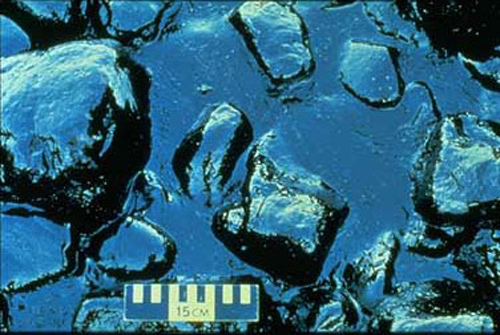
image via NOAA

The UK Guardian very recently released an article about a whistleblower at the International Energy Agency (IEA), who says that the world is running out of oil faster than reports have told us – that the World Energy Outlook report that came out on November 10th downplays the real rate of depletion of existing fields while being over optimistic about the chances of finding new fields.

This serious allegation – that the U.S. and other countries encouraged the production of an unreliable report in order to avoid panic buying – means that such reports, if the allegation is proven true, are not trustworthy for planning for energy use or climate change legislation*.

Another thing it means is that we should be making greater strides towards reducing oil dependency through developing alternative fuel sources and working harder to conserve what oil remains. It took thousands of years to get the supply we have, so once it’s gone, it’s gone.

It’s Not Just For Transportation

Besides putting gasoline in a car, petroleum products are used in ways you might not think of:

  • Deodorants
  • Panty Hose
  • Antihistamines
  • Hair Dye
  • Anesthetics

These are just a few. According to Ranken Energy, Americans alone consume 3.5 gallons of oil and 250 cubic feet of natural gas (created using petroleum) each per day through car fuel and other products.

Some Embrace Change – Others Have Change Thrust Upon Them

Already there are conflicts around the world about oil reserves – who actually owns them and who gets to decide what to do with them and even alternative fuels can generate clashes. The longer it takes to reach agreements and solutions, the more conflict is likely, the more change in the way we live our lives is likely.

Due to the Climate Change summit in Copenhagen coming up next month, this year’s World Energy Report includes information on how energy use affects the climate (Climate Change Excerpt). In part it says,

“Energy, which accounts for two-thirds of today's greenhouse-gas emissions, is at the heart of the problem - and so must form the core of the solution. We need urgently to set in motion an energy and environmental revolution, to transform the way we use energy and to deliver a sustainable future."

The report concludes that the major change in the way we use energy has to come from reducing the carbon footprint of transportation. The more efficient the energy use, the less greenhouse gases, the better and longer we and our planet will live. It’s that simple and that complicated.

Some Things You Can Do

  • Read the ingredients - be aware of the things you use that contain petroleum and try to find alternatives.
  • Use public transit or ZoomPool - ZoomPool was created so that people could lower their carbon footprint in transportation by having fun socially through ridesharing. It’s not just for commuting – share a ride home for the holidays, to the mall, to the grocery store, to the movies, to a seminar or museum exhibit. Sign yourself up, even if you don’t plan immediate use and encourage your friends and family – that way you’ll have a ready source of people to connect with; people you already know and people they already know.
  • Encourage Others to RideShare – use ZoomPool’s FB Fan page to post events you’re interested in attending or events you think others might be interested in and encourage them to rideshare there.
  • Email your government representatives and tell them you want climate legislation.
  • Support global climate agreements.
  • Use social media to support your efforts and encourage others to do the same

We all have to live here – it’s how we live that is determined by our actions – and our inaction.

* Note that critics of the IEA and the World Energy Outlook reports say that not only can the claims made in last year’s and this year’s reports not be supported by the data, but that the world has already passed its peak in production.


Thursday, July 16, 2009

Speed Racer - Who Me?

Speed Racer poster via The Things I Don't Care About


Probably one of the hardest things we can do to reduce the amount of gasoline we use is to slow down.

When you have to be somewhere – like work or to meet someone – and time isn’t on your side, leaning a little more heavily on the accelerator pedal is a real temptation. Even more so, if someone else (your company, your parents) are buying the fuel. And we’re all guilty of it. We know we should plan a little better and leave a little earlier, but the time occasionally gets away from us and we try to make it up by going a little faster.

Two problems with that, though; one is that speeding can get to be a habit and the other is that it doesn’t really save you the time you think it does.

It’s Not Just About Speeding Tickets

It’s easy to guess why speeding is a bad habit. If you do it habitually, you’re more likely to get a ticket. But did you know you’re also more likely to be in an accident? The National Highway Traffic Safety Administration says that speeding was known to be a factor in 1/3 of fatal accidents in 2006 (by the way, another good reason to give up your SUV is that 10% of people injured in an accident are in SUVs compared to 3% of passenger cars).

If you’re not a habitual speeder, don’t become one. Although it’s not as important as saving your life, speeding uses up fuel faster as does speeding up and then slowing down. Staying at a consistent speed saves you fuel and keeps you saner, while reducing the chances you’ll be part of next year’s accident statistics. And if you’re the optimistic kind who thinks accidents like that won’t happen to you, just remember that speeding tickets can be expensive to collect – in fines and in increased insurance costs.

But I’m Going to Be Late!

As for saving time – a long time ago, one of the government agencies put out a little film that pitted an aggressive driver against a nonaggressive driver leaving from the same place and arriving at the same destination. The aggressive driver drove faster than the limit, rolled through stop signs and took every advantage possible. The nonaggressive driver followed traffic laws and kept a consistent and legal speed. The aggressive driver arrived at the final destination about two minutes ahead of the other driver. Two minutes. Not much time saved considering what could have happened and how stressed out the driver was when he got where he was going. Like to check out how much time you save by speeding? Here’s a calculator.

There’s another thing about speeding: when you combine it with inattention or alcohol, the chances of a serious accident get bigger much faster.

By the way, if you don’t have far to go, consider walking or cycling. If you must take the car, consider ridesharing. You won't get there faster but you may make a new friend and you'll certainly decrease the cost of getting there.