Showing posts with label ridesharing. Show all posts

Friday, December 4, 2009

Los Angeles Auto Show - Season of Hope


Subaru Hybrid Tourer (Concept)

I love cars.

Given that their overuse and carbon footprints make most of them environment unfriendly, you would think that I would have more distain than appreciation for them, but many autos are works of art – the marriage of design to functionality make them a pleasure to view and drive or ride in. Plus, I live in California, where public transportation is only beginning to catch on. But being conscious of their impact on both our present and future health, as well as the co-founder of a social rideshare company, it’s really heartening to see the number of more fuel-efficient, new fuel, or hybrid fuel cars that are making their debut.

At this year’s Los Angeles Auto Show there are 49 of these more environmentally-friendly transportation options and only four are concepts – 45 options available in the marketplace now or soon.

In this blog, we’ve talked about some of the alternative fuels, and if you’ve read those posts, you won’t be surprised that most of the offerings at the LA show are either “fuel-sippers” or hybrids. But there are a few electric cars and fuel cells sprinkled in. Granted that 49 isn’t a huge number out of the many vehicles that will be on display, but it’s a market that’s growing and since, for many of us this is a season of Hope, we may just have to take it on faith that the market will eventually grow to be so dominant that “alternative fuel” cars won’t even rate as a distinct attraction.

In January, the Pew Research Center found that the environment had slipped significantly as a priority for many Americans, but that doesn’t mean the environment will just maintain its equilibrium until attention comes back to it. So we have to continue to take the opportunity to educate, to enlighten and to make reducing your carbon footprint an individual priority, even if it’s not a national priority. Which is the reason ZoomPool exists – and if it’s fun, maybe people will do it more often. Responsible car ownership, responsible driving, and responsible riding. It will make a difference.

For a more in-depth view of the alternative fuel cars and hybrids being shown in Los Angeles, check out The Daily Green



Sunday, November 29, 2009

Here Come the Holidays...


… and more opportunities to share a ride while you share the fun!


Let’s start with getting home. If you’re at school or even if you live and work just across town from your folks, you can probably catch a ride or provide one to someone who’d like to enjoy a family holiday without adding to the congestion and tension that trying to get home before the cranberry sauce is served can cause.

Speaking of cranberry sauce, what about that trip to the market to pick up the ingredients for that dish you promised to bring to the party or the high blood pressure inducing potential nightmare called “holiday shopping at the mall”? Wouldn’t it be more fun if you could save gas and reduce your carbon footprint by getting together with one or more to hit the stores and maybe the food court?

The holiday season is often blockbuster movie season, too. And parking, never great at the best of times, is even worse during the days leading up to New Year’s. This is also true of the many special plays and concerts, charity events, gift and art shows that happen around this time of year.

And then there are those winter sports you’ve been waiting for – snowboarding, skiing, or just taking time to go up into the snow covered mountains and enjoy the scenery and maybe a hot drink in a lodge with a view.

Simply put, this time of year is full of as many opportunities as you could hope for to have fun and share it with others. Why not make the most of it while doing yourself, your friends and family, and the planet a favor at the same time by using ZoomPool? Log in and post a trip that you are sharing with a friend or family member. That way you can fill an empty car seat while you both meet someone new.

Commuting over the holidays with a new rideshare partner increases the Zoom Pool of potential matches, increasing everyone’s chances of finding someone interesting to ride with. Tell folks you know about ZoomPool and recommend they register. That’s the best way to build our green social community!

Share Your Interests

Just a reminder – we’re on Facebook, which is a great place to “meet up” and talk about where to go and what to do. You can always post an event you’re interested in on our fan page and share it on your wall to let everyone in your network – and ours – know what you’re looking forward to over the next few weeks.

Also if you are holding an event or you are going to one that should be ZoomPooled, recommend and use our SmartBadge tools to help aggregate event attendees. It’s a great way to improve transportation efficiency and decrease parking needs.

Monday, November 23, 2009

The Move Toward Green Real Estate

image via The Mortgage Reel

You know a trend is becoming mainstream when certifications begin to be offered for it.

This is what’s happening in real estate, with a growing number of realtors and brokers learning what constitutes green housing and how to position themselves in an expanding market where green housing continues to sell even in slow times.

Portland Oregon’s regional multi-listing service for real estate will soon be calling out energy efficient homes due to a survey that showed that 78% of potential buyers would prefer an energy efficient home over others.

This greening of real estate buying and selling translates over a wider area than just the buyer and seller and their agents. It also encompasses the builders (LEED certification), the appraisers, the lenders and the licensing agencies. For example, real estate agents and brokers will want/need certification so that potential clients can choose them confidently and those agents and brokers will choose to work with lenders, appraisers and builders who are also certified and knowledgeable.

Green Housing Standards

Although green building is still done largely according to voluntary standards, the National Association of Home Builders is putting together a standard they hope will be widely accepted and adopted and the U.S. Green Building Council is putting together LEED certification standards for residential buildings.

All of this is good news to those concerned about reducing our energy footprints – in the long term there will be more green housing available and more incentives for it. But there’s another aspect of this increased interest in green housing that may not be so readily seen: while the professionals in real estate and the related fields are becoming certified and knowledgeable in the field of energy efficiency and sustainable building practices, they are more likely to talk about what they’ve learned with other professionals and clients. So that even those who previously did not have an interest in or knowledge of these practices and trends, will find themselves becoming more aware of them. The adoption of greener standards and more widespread understanding of them may fuel additional growth and understanding. With luck, there will soon come a time when green is the standard for building and renovating. And that will be a real estate move that will benefit more than just the real estate profession.

Home For the Holidays

While we’re on the subject of home, let’s not forget to make the holidays greener by thinking about the environment when purchasing gifts or when travelling. Some won’t be able to avoid flying home, but if you can, you should, since jet travel is extremely polluting and uses up an enormous amount of fossil fuel. And all of those drives to the mall, to visit family and friends while you’re home; those holiday events, parties and other outings can be made greener if you share them using social ridesharing with ZoomPool.

Share your holiday plans with us on Facebook or Twitter. Letting others know about events and gatherings they may not be aware of can increase your chances of finding a compatible rideshare partner!

Zoom green Zoom together ZoomPool!
Social Ridesharing


Friday, November 13, 2009

Is There Even Less Oil Than We Think?

image via NOAA

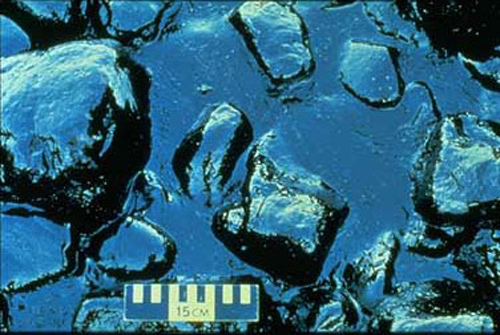
The UK Guardian very recently released an article about a whistleblower at the International Energy Agency (IEA), who says that the world is running out of oil faster than reports have told us – that the World Energy Outlook report that came out on November 10th downplays the real rate of depletion of existing fields while being over optimistic about the chances of finding new fields.

This serious allegation – that the U.S. and other countries encouraged the production of an unreliable report in order to avoid panic buying – means that such reports, if the allegation is proven true, are not trustworthy for planning for energy use or climate change legislation*.

Another thing it means is that we should be making greater strides towards reducing oil dependency through developing alternative fuel sources and working harder to conserve what oil remains. It took thousands of years to get the supply we have, so once it’s gone, it’s gone.

It’s Not Just For Transportation

Besides putting gasoline in a car, petroleum products are used in ways you might not think of:

  • Deodorants
  • Panty Hose
  • Antihistamines
  • Hair Dye
  • Anesthetics

These are just a few. According to Ranken Energy, Americans alone consume 3.5 gallons of oil and 250 cubic feet of natural gas (created using petroleum) each per day through car fuel and other products.

Some Embrace Change – Others Have Change Thrust Upon Them

Already there are conflicts around the world about oil reserves – who actually owns them and who gets to decide what to do with them and even alternative fuels can generate clashes. The longer it takes to reach agreements and solutions, the more conflict is likely, the more change in the way we live our lives is likely.

Due to the Climate Change summit in Copenhagen coming up next month, this year’s World Energy Report includes information on how energy use affects the climate (Climate Change Excerpt). In part it says,

“Energy, which accounts for two-thirds of today's greenhouse-gas emissions, is at the heart of the problem - and so must form the core of the solution. We need urgently to set in motion an energy and environmental revolution, to transform the way we use energy and to deliver a sustainable future."

The report concludes that the major change in the way we use energy has to come from reducing the carbon footprint of transportation. The more efficient the energy use, the less greenhouse gases, the better and longer we and our planet will live. It’s that simple and that complicated.

Some Things You Can Do

  • Read the ingredients - be aware of the things you use that contain petroleum and try to find alternatives.
  • Use public transit or ZoomPool - ZoomPool was created so that people could lower their carbon footprint in transportation by having fun socially through ridesharing. It’s not just for commuting – share a ride home for the holidays, to the mall, to the grocery store, to the movies, to a seminar or museum exhibit. Sign yourself up, even if you don’t plan immediate use and encourage your friends and family – that way you’ll have a ready source of people to connect with; people you already know and people they already know.
  • Encourage Others to RideShare – use ZoomPool’s FB Fan page to post events you’re interested in attending or events you think others might be interested in and encourage them to rideshare there.
  • Email your government representatives and tell them you want climate legislation.
  • Support global climate agreements.
  • Use social media to support your efforts and encourage others to do the same

We all have to live here – it’s how we live that is determined by our actions – and our inaction.

* Note that critics of the IEA and the World Energy Outlook reports say that not only can the claims made in last year’s and this year’s reports not be supported by the data, but that the world has already passed its peak in production.


Friday, September 18, 2009

Lookouts and Lighthouses Repurposed, Oh My!


image from recreation.gov

Back in the day, there were such a thing as forest rangers who spent time in tall towers with binoculars in hand, looking for signs of smoke and fire. These days, weather satellites and other technology have taken over those tasks, but rather than dismantle the lookouts, they have been repurposed as getaways. This doesn’t mean they’ve lost their rough charm, though. Although there have been fire lookout stations that have been made into upscale weekend or vacation retreats, the towers offered through recreation.gov – some of which were built in the 1930s – seem as untouched as the forests that surround them.

Though most provide beds, visitors may be required to bring their own bedding as well as water and food and outhouses at ground level are the usual. What amenities are available depends entirely on which facility you’re talking about, but one thing remains consistent – great views and peace and quiet. And at night – a sky full of stars that can’t be seen when near a city.

Ocean Views

Even further back than there were forest fire lookout towers, there were lighthouses. Today, many of them have been preserved by private owners or nonprofit groups which rent out luxury accommodations. But there are a handful of lighthouses that are still operated by state or federal parks, their lighthouse keeper’s homes or specially built cottages available to the public at modest fees, most available as hostel lodgings, where a nightly bed can run as little as $23.

What Else Can be Repurposed As Lodging?

There have been several articles about shipping containers being repurposed as homes. Churches, lofts, even grain silos have been converted to provide shelter to humans. Apparently, the only limits on repurposing for living space lie within our imaginations (note: requires free NYT login).

Some of us may spend so much time commuting in our cars that they begin to feel like home and while we may want to reduce our carbon footprint by ridesharing, we’re sometimes reluctant to share our home away from home with a stranger. ZoomPool makes it easy to find a rideshare partner who is compatible with the way we live. Get more fun per gallon with ZoomPool.

Thursday, September 10, 2009

How Recycleable Is Your Life?

image via idioms by kids

We Americans have a lot of stuff. Generally, a lot more than we know what to do with. And this becomes apparent particularly when someone is moving, as a colleague of mine did a couple of months ago.

Downsizing after the early death of her husband, she found herself faced with the hugely unpleasant task of sifting through nearly 30 years' worth of acquisitions. Some items she knew could be recycled, others not. Still others she wasn't sure about. When the dust finally settled from her move, she discovered that some of the things that were technically recyclable turned out to be unrecyclable and there were things she had not even thought were recyclable that were!

Unlikely Recyclables

Did you know dentures, eyeglasses, prosthetic limbs and cell phones are recyclable? Groups like the Lions or Elks clubs and some businesses collect some of these items and make them available to be re-fitted for new users who can't afford to purchase them for themselves, or in the case of dentures, recycling the materials. So before you throw away your previous pair of prescription lenses, think about who might use them.

Unlikely to be Recycled

It may be a perfectly useful piece of furniture - a bookcase, a desk, a table. But if it is made with particle board, a number of charity resellers like Goodwill won't take it. It may be that furniture made with particle board just doesn't sell, although it can sometimes disappear.

It could be just a week old with the tags left on it, but for thrift stores, mattresses are out. It's a health issue - the law doesn't allow them to take the chance of spreading illness or varmints through beds. This doesn't mean your old mattress must go to the landfill, though. Many mattress sellers are offering to collect used mattresses/bedsprings because the materials can be salvaged.

So How Do You Know?

First, start with the label or tag, if there is one. Look for the recycling symbol. If it's there, the item is technically able to be recycled.

Now check with your local recycling center online or by phone about what they're able to take. They may not be able to recycle somethings for lack of the proper machinery or destination. Earth911 can be a good place to start looking for both centers and information on what's recyclable.

If it's a useful item in good condition that can't be accepted by Goodwill or another agency, you can still offer it on craiglist or perhaps swap for something else. A friend might be having a garage sale or there might be a local consignment shop. It might even be worth something as a collectible.

Plan Ahead

If you're thinking about a move in the future, even if it's not the near future, it's worthwhile to begin planning now. The more information you have on the recycling options available to you - whether for re-use or breakdown for materials - the better you can plan and the fewer still useful items will end up taking space in the landfill. In fact, though Fall is just arriving, Winter and a new-start New Year will be just behind it, followed by Spring and you-know-what.

Though your actions may not keep the landfills from filling, every little thing, whether composting or ridesharing, helps offset your carbon footprint.

Friday, September 4, 2009

Incentives to Rideshare - What Would You Take?


For a lot of us, ridesharing is about saving the planet one empty car seat at a time. But various rideshare programs, corporate and government, have been disappointed enough in their user statistics (and under pressure to perform better) that they have begun to offer various incentives for carpooling.

WTOP, in the D.C. area, reported in June that Commuter Connections (Maryland) would begin paying commuters $2 every day that they carpool. The idea is that once people try it, they’ll like it and continue. This pilot program comes after another D.C. innovation, the “Bridge Bucks” program, which paid Woodrow Wilson Bridge commuters $50 a month to take public transportation or vanpools, which in turn was followed by a Department of Transportation version which hoped to lure commuters away from their cars during the time the Frederick Douglass Memorial Bridge was closed for repairs.

Many colleges offer staff and faculty incentives to take transit or rideshare by offering such motivators as a guaranteed ride home if you need one, subsidized rail or bus tickets, preferred parking and “bucks” that can be earned and spent on campus. Incentives need not be limited to carpoolers, but may encompass bicycle riders and pedestrians as well. Cities around the nation have chosen to recognize employer efforts at encouraging ridesharing and use of public transit and vanpools and some have even partnered to offer subsidies to start vanpools.

For people not working for a big company or government, the incentives are usually smaller or nonexistent. Commuters using the “Slug” method of carpooling just want to get where they're going. For the passenger it’s transportation. For the driver, it’s an opportunity to use the carpool lane. The once unwritten rules include no exchange of names and no speaking unless spoken to. Since the inception of this grassroots form of organized hitchhiking, there has been more and frequent discussion and voting at the slug line website about new slug line locations and the rules. And slugs can also search for items left behind in someone’s car. Slugs say it’s relatively safe because D.C. high-occupancy lanes require at least three people in a vehicle. You stand in line, get in a car, and hope for the best.

Yet, even with “casual commuting” there can be a pay off in social networking; after a while, slugs begin to recognize one another and see each other around town and this can lead to casual friendships, making the ride more enjoyable. And with the popularity of the forums and participation in conversation on the slug website, it seems as though even those willing to travel with others anonymously crave some sort of interaction. So maybe it isn’t all about economic incentives – employer brownie points or government statistics. Given a choice, probably most people would prefer to ride with a pleasant companion than sit in silence for an hour or so. Will incentives like being paid to take the bus or train or carpool make a dent in the growing traffic surrounding the city centers? Possibly. The $2 a day pay program by Commuter Connection is a pilot program ending in October. If it’s a success, it may spread to other cities. Or, if the traffic remains bad but not like D.C., it may not.

If you’re not ridesharing, what would it take to for you to start?

Would it take a reward program or the opportunity to exchange conversation and thereby make the ride shorter? Would it take confidence that you already know something about the person you’re travelling with because you’ve learned a bit about how close they match to your ideal trip partner? Would it be sufficient incentive to see your suggested match’s feedback ratings from other carpoolers? There is even the chance for those in the dating pool to meet other like-minded members in a low-key situation and “test drive” the relationship. ZoomPool offers these incentives. That’s pretty nice – especially if you would like to add ridesharing as a way to reduce your personal carbon footprint. In which case, ZoomPool might be less of an incentive and more of a reward. Why not try it? After all, the more people who join the community, the more rides will become available and the more the community can grow. In the end, that could be an incentive for everyone.

And for those of you who decide to upgrade to Certified membership with its additional personal safety filters, the reward includes participation in the ZoomstR Plus loyalty program, where shared miles accumulate toward gifts and discounts.

Friday, August 21, 2009

Alternative Fuel Update: Zinc Air Batteries


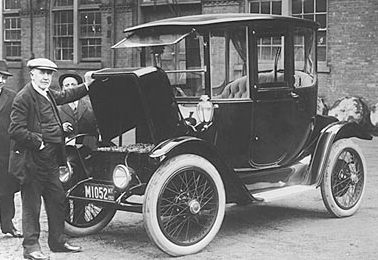
T.Edison's Electric Car (via the Smithsonian Institution)

A few years ago, E.O. Lawrence Berkeley National Laboratory described zinc air batteries as “Electrochemical cell that shows promise of exceeding performance targets set by the Department of Energy for battery power and energy density in electric vehicles.”

This year, Energizer began marketing their “prism” battery, a zinc air battery that, though not rechargeable, is meant to have as much as three times the life of a lithium battery. Other manufacturers are considering rechargeable zinc air batteries, and zinc air button cells are already used for hearing aid and watch batteries. Some of the attraction for this technology stems from the fact that it produces very dense energy (although at a low level), manufacturing may be cheaper than other types of batteries and – when properly sealed – zinc air cells have a much longer shelf life than lithium. But there are drawbacks.

Electropaedia lists several shortcomings for zinc air:
  • Sensitive to extreme temperature and humid conditions.
  • Carbon dioxide from the air forms carbonate which reduces conductivity.
  • High self discharge.
  • After activation, chemicals tend to dry out and the batteries have to be used quickly.
  • Although recharging is possible it is also inconvenient and is only suitable for high power types.
  • High internal resistance which means zinc air batteries must be huge to satisfy high electrical current needs
  • Huge, inconvenient-to-recharge batteries that don’t work well in the rain.
Doesn’t sound like the promising technology described by the Berkeley National Laboratory, does it?

Zinc air has been looked at as a fuel alternative for more than a decade. In 1995, the Science & Technology Review printed a paper on the development of the air cell by Lawrence Livermore Laboratory in California and its use in a shuttle bus borrowed from the Santa Barbara transit district. The paper, written by John Cooper, PhD. of the Laboratory, indicated that commercial production of the zinc air battery could begin as early as 2000 if significant progress could be made:
  • Determining how many times the zinc reaction products could be recycled
  • Determining the longevity of the battery in actual or simulated road conditions
From 2000 to 2003, the electric vehicle division of the Electric Fuel Corporation partnered with the U.S. Department of Transportation for a four-phase electric transit system using buses powered by zinc air technology, with an emphasis on commercialization. For reasons not stated, the program shutdown in 2004, though the information on it is still available, including a downloadable PDF. There is also a video on one of the buses as it was used in Las Vegas.

Metal air cell batteries could give a big boost to electric car sales if the technology can be improved so that the batteries don’t use up almost all of the car space and if recharging them wasn’t such a pain. Unfortunately not much research seems to have been done in the last five years, so we’re not likely to hear any more until 2020, when
Toyota hopes to unveil a next-generation zinc or vanadium battery created by their new battery lab.

-------------

If you’re planning on attending the
4th Annual Wellness Fair in Santa Cruz on August 22nd, consider carpooling. ZoomPool is the Fair's Rideshare Partner. Register at ZoomPool then click on our SmartBadge to find a compatible rideshare partner. It’s fast and free. You can reduce your carbon footprint and make a new friend at the same time, while sharing the costs and avoiding parking issues.

Friday, August 7, 2009

"Ecological Footprint" - What's Yours?


Treehugger is a great environmental site that provides lots of useful information, including an article about Ecological Footprinting and a new calculator for it, presented by the UK group Bioregional, which says that they are an “entrepreneurial charity with the aim of leading the way to sustainable living through practical demonstration.” The One Planet Living calculator was developed in response to the knowledge that green living isn’t just about reducing your carbon footprint. The calculator, with data analysis by Stockholm Environment Institute (SEI), asks several questions to determine a person’s impact on the environment through how much biologically productive land and water is consumed to support them and to absorb the waste generated by them. Using this methodology, they calculate that the global per capita target should be 1.8 global hectares of biologically productive land (biological poductive land divided by population). Bioregional’s research indicates that the average person in the UK has an ecological footprint of around 5.4 gha (global hectares) or 3 times the global per capita target, meaning that if everyone on the planet consumed and produced waste at the same rate as the average UK resident, world population would require two other planets just to support them! The Test The One Planet Living calculator allows you the choice of a short or long test. I took the short test and answered predictable questions such as the type of car driven and how many miles and somewhat unpredictable questions like whether or not I went to a museum or took a class in the last 12 months. At the end of the quiz, though I recycle everything I can and am not a frequent driver, my ecological footprint was rated at 5.8, or even above that of the average UK resident. Note that the calculator doesn’t take into account factors that are beyond your control, like the insulation the owner of your apartment building puts in or that your apartment refrigerator is an older model and therefore less energy efficient. In the view of Bioregional, whether or not you control these factors is irrelevant; you consume in that space, so your control or lack of it doesn’t affect the end result of that consumption. Very humbling. The Guidelines After the calculation, you’ll find 10 guidelines for sustainable living:
  • Sustainable wat
  • Zero carbon
  • Zero waste
  • Sustainable transport
  • Local and sustainable food
  • Sustainable water
  • Natural habitats and wildlife
  • Culture and heritage
  • Equity and fair trade
  • Health and happiness

Each section provides suggestions based on your quiz answers. In mine, for example, I indicated that I prefer showers and under “sustainable water” there was the comment, “Well done. Standard showers use less water than baths.”
Take a look at the One Planet Living Calculator and take the test to see how much of an impact you’re having. Even if you’ve done a good job reducing your carbon footprint, you may find – as I did - there is still a lot of room for improvement. And, as always, consider reducing your impact on the roadway by using public transport, cycling or walking, or ridesharing.


Thursday, July 16, 2009

Speed Racer - Who Me?

Speed Racer poster via The Things I Don't Care About


Probably one of the hardest things we can do to reduce the amount of gasoline we use is to slow down.

When you have to be somewhere – like work or to meet someone – and time isn’t on your side, leaning a little more heavily on the accelerator pedal is a real temptation. Even more so, if someone else (your company, your parents) are buying the fuel. And we’re all guilty of it. We know we should plan a little better and leave a little earlier, but the time occasionally gets away from us and we try to make it up by going a little faster.

Two problems with that, though; one is that speeding can get to be a habit and the other is that it doesn’t really save you the time you think it does.

It’s Not Just About Speeding Tickets

It’s easy to guess why speeding is a bad habit. If you do it habitually, you’re more likely to get a ticket. But did you know you’re also more likely to be in an accident? The National Highway Traffic Safety Administration says that speeding was known to be a factor in 1/3 of fatal accidents in 2006 (by the way, another good reason to give up your SUV is that 10% of people injured in an accident are in SUVs compared to 3% of passenger cars).

If you’re not a habitual speeder, don’t become one. Although it’s not as important as saving your life, speeding uses up fuel faster as does speeding up and then slowing down. Staying at a consistent speed saves you fuel and keeps you saner, while reducing the chances you’ll be part of next year’s accident statistics. And if you’re the optimistic kind who thinks accidents like that won’t happen to you, just remember that speeding tickets can be expensive to collect – in fines and in increased insurance costs.

But I’m Going to Be Late!

As for saving time – a long time ago, one of the government agencies put out a little film that pitted an aggressive driver against a nonaggressive driver leaving from the same place and arriving at the same destination. The aggressive driver drove faster than the limit, rolled through stop signs and took every advantage possible. The nonaggressive driver followed traffic laws and kept a consistent and legal speed. The aggressive driver arrived at the final destination about two minutes ahead of the other driver. Two minutes. Not much time saved considering what could have happened and how stressed out the driver was when he got where he was going. Like to check out how much time you save by speeding? Here’s a calculator.

There’s another thing about speeding: when you combine it with inattention or alcohol, the chances of a serious accident get bigger much faster.

By the way, if you don’t have far to go, consider walking or cycling. If you must take the car, consider ridesharing. You won't get there faster but you may make a new friend and you'll certainly decrease the cost of getting there.