Showing posts with label green. Show all posts

Monday, November 23, 2009

The Move Toward Green Real Estate

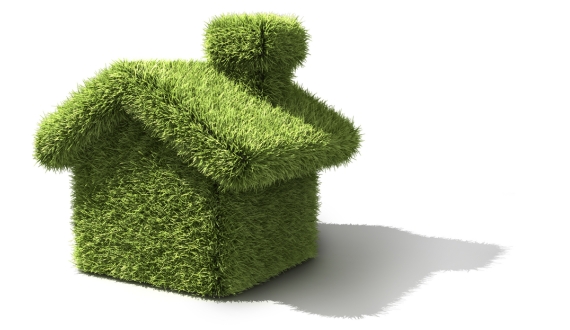
image via The Mortgage Reel

You know a trend is becoming mainstream when certifications begin to be offered for it.

This is what’s happening in real estate, with a growing number of realtors and brokers learning what constitutes green housing and how to position themselves in an expanding market where green housing continues to sell even in slow times.

Portland Oregon’s regional multi-listing service for real estate will soon be calling out energy efficient homes due to a survey that showed that 78% of potential buyers would prefer an energy efficient home over others.

This greening of real estate buying and selling translates over a wider area than just the buyer and seller and their agents. It also encompasses the builders (LEED certification), the appraisers, the lenders and the licensing agencies. For example, real estate agents and brokers will want/need certification so that potential clients can choose them confidently and those agents and brokers will choose to work with lenders, appraisers and builders who are also certified and knowledgeable.

Green Housing Standards

Although green building is still done largely according to voluntary standards, the National Association of Home Builders is putting together a standard they hope will be widely accepted and adopted and the U.S. Green Building Council is putting together LEED certification standards for residential buildings.

All of this is good news to those concerned about reducing our energy footprints – in the long term there will be more green housing available and more incentives for it. But there’s another aspect of this increased interest in green housing that may not be so readily seen: while the professionals in real estate and the related fields are becoming certified and knowledgeable in the field of energy efficiency and sustainable building practices, they are more likely to talk about what they’ve learned with other professionals and clients. So that even those who previously did not have an interest in or knowledge of these practices and trends, will find themselves becoming more aware of them. The adoption of greener standards and more widespread understanding of them may fuel additional growth and understanding. With luck, there will soon come a time when green is the standard for building and renovating. And that will be a real estate move that will benefit more than just the real estate profession.

Home For the Holidays

While we’re on the subject of home, let’s not forget to make the holidays greener by thinking about the environment when purchasing gifts or when travelling. Some won’t be able to avoid flying home, but if you can, you should, since jet travel is extremely polluting and uses up an enormous amount of fossil fuel. And all of those drives to the mall, to visit family and friends while you’re home; those holiday events, parties and other outings can be made greener if you share them using social ridesharing with ZoomPool.

Share your holiday plans with us on Facebook or Twitter. Letting others know about events and gatherings they may not be aware of can increase your chances of finding a compatible rideshare partner!

Zoom green Zoom together ZoomPool!
Social Ridesharing


Friday, July 31, 2009

Low Impact Houses - Alternative Materials & Techniques

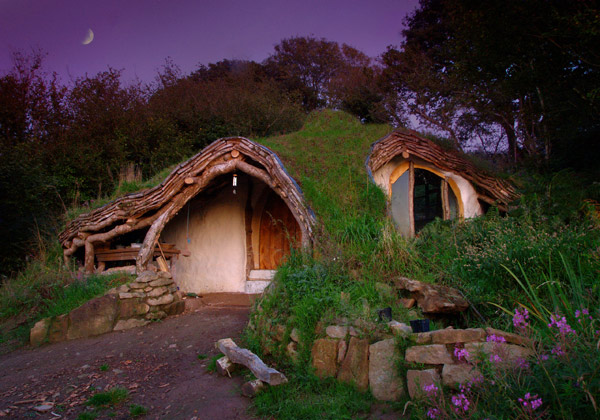
image from A Low-Impact Woodland Home


There are some interesting things happening in terms of alternative building materials and techniques that show that a greener building can be even more attractive than one designed and built in currently accepted, standard ways. The Simondale house is a good example in that the builder employed straw bales, recycled and found wood, reciprocal wood roofing and lime plastering. And the house’s appearance is rather more charming than most homes with the added feature of having a low visual impact due to being dug into the surrounding hillside. Completed, it looks as though it has always been there, compared with the finished products of most standardly-built subdivisions. Nor does it lack for creature comforts: well-insulated, uses solar power for electricity, has running water and a beautiful view.

Alternative Housing Means Diversity

It might be more descriptive to refer to Low-Impact housing rather than Alternative. Low Impact also goes by Ecological, Factor Four, Green, Healthy, Low Emission, Passive, Zero Emission, etc. The main point is to lower the impact on the environment from site selection through the remainder of the house’s lifecycle. The finished home can take on any number of different looks depending on the building site and the combination of traditional and new technologies chosen for materials and construction.

Urban Low Impact

Paola Sassi is an architect in Wales who chose to showcase sustainability in her choice of building materials. As she put it in an article on the Homebuilding & Rennovation UK magazine site: “…I wanted to prove that it is possible to build a house in a city centre that is sustainable, comfortable and cheap to run.” Her design, situated among Victorian style houses in Cardiff features hemp as an insulator, veneered plywood interiors, triple glazed windows on one side and solar panels and has no heating system. Planning for the future and an eventual demolition, Sassi chose only materials that could be reused or recycled. The biggest learning curve for the contractors building the house was that a house without a heating system must be air tight and this required some do-overs during construction. In the end, though, the cost of maintaining her house is less than a quarter of what a standardly built house of the same size costs and it emits less than a quarter of a standard house’s CO2.

Choice of Materials

Depending on the chosen site, a host of alternative, low-impact materials and methods are available. Adobe is a historically used and still viable material. Bamboo is a sustainable material that’s being used in floors but has also served long and well for construction in tropical areas, though the result can be strikingly modern. Cob houses are built of earth and straw and have survived centuries. They require virtually no tools at all, since the buildings are literally sculpted by the builder. At first thought, cordwood wouldn’t seem to be that environmentally correct because of the use a large amount of wood. But the wood used is most often what is considered waste material and if a mortar other than cement could be used efficiently, cordwood building could be even more of an ecological choice than the rather art nouveau styles of lightweight concrete, which must still be produced by concrete plants where toxicity can be a concern for neighbors.

In most cases, the builder will probably choose to combine materials like adobe and cob to suit the site environment and make use of changes in technology and methodology that afford the best chance of success to make their vision a reality.

Strange Housing Materials

Some materials may not be the first things that come to mind when building a home, but here are some that have been tried anyway. In Australia, they’re looking at cardboard and in New Mexico an architect named Mike Reynolds is using rubber tires, dirt and aluminum cans. And aluminum cans is what one man used to replace the siding on his house, while another man went one step further to design an entire house out of aluminum.

Housing Materials of the Future

As sustainable materials building with an eye to complementing the environment rather than dominating it becomes more mainstream, we’re likely to see even more variety in the materials and methods available to builders. This trend is only likely to gain momentum as global warming and the scarcity of nonrenewable resources continue to make an impact. In the near future, building “green” may be such a standard that the term itself goes out of fashion. Like ridesharing, it’s an idea whose time is here.